

President and COO
Northern California’s commercial real estate market is still adjusting. Office vacancy remains elevated in certain urban cores. Capital is more selective. Ground-up development has slowed in many submarkets.
But here’s what has not slowed down: Tenant improvements. Repositioning plays. Adaptive reuse.
In a higher rate environment, owners are choosing to work smarter with what they already have. Instead of rolling the dice on speculative builds, they are upgrading, converting, and modernizing existing assets to protect value and drive lease activity.
And when done right, these projects can produce some of the strongest returns in today’s market.
The Bay Area and the Central Valley are not moving at the same speed, and they are not reacting the same way.
In San Francisco and parts of Oakland, office vacancy remains historically elevated, generally hovering in the low to mid 30 percent range depending on asset class. Owners are still navigating reduced footprints, slower lease-up, and downward pressure on older office product. That stress is driving many of the adaptive reuse conversations making headlines.
But the Central Valley tells a different story.
Markets like Modesto, Stockton, Tracy, and parts of Sacramento have not experienced the same level of office distress. Vacancy exists, but it is not paralyzing. Most of what we are seeing locally is right-sizing, not abandonment.
Industrial remains one of the strongest asset classes across the Valley. Logistics, distribution, food processing, and light manufacturing continue to anchor demand along the Highway 99 and I-5 corridors. New product has delivered, but well-located facilities with modern clear heights and energy efficiency still perform.
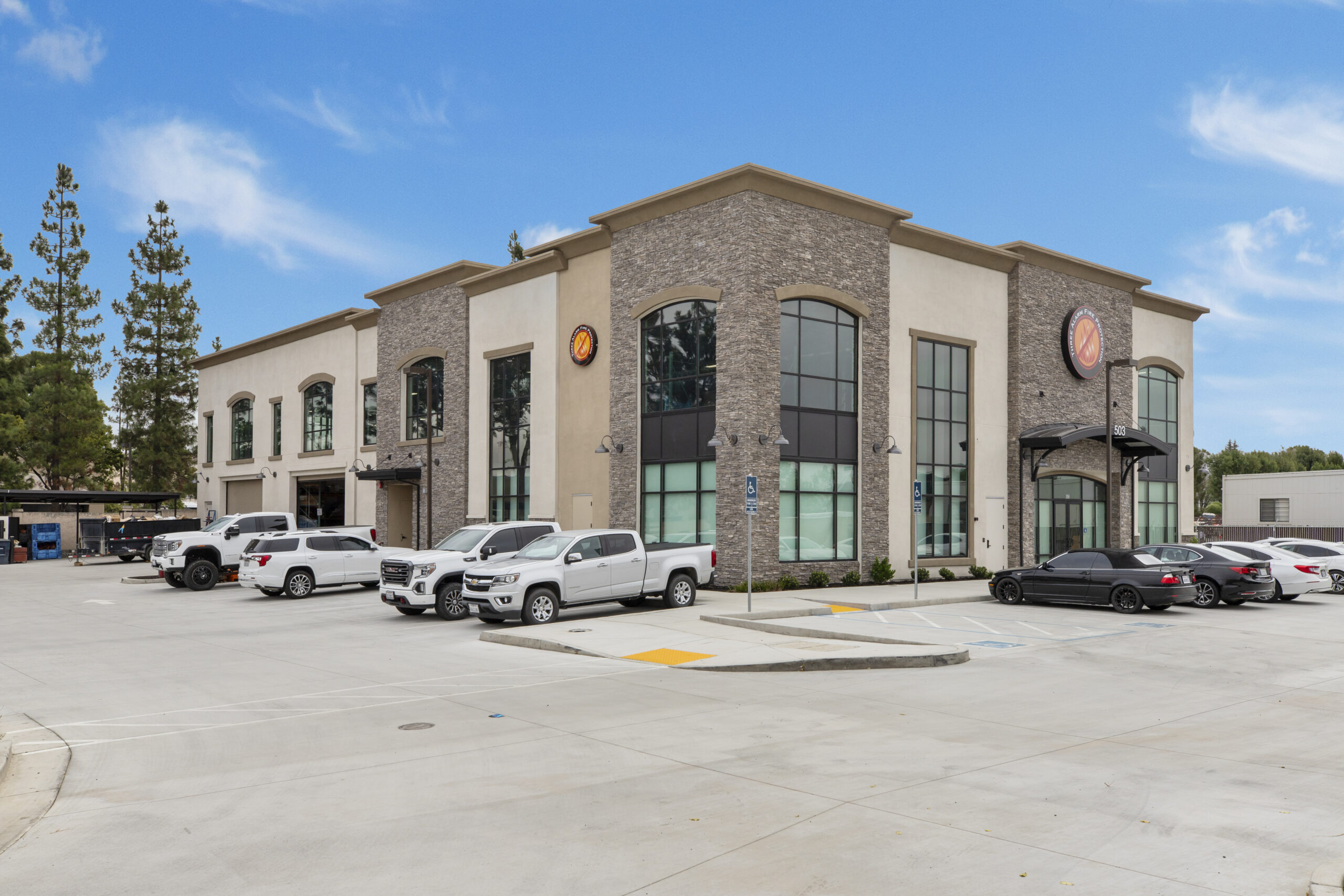
Retail in the Central Valley has been resilient. Grocery-anchored centers, healthcare tenants, fitness operators, and quick-service restaurants are active. We are seeing repositioning of older centers through façade upgrades, tenant improvements, and strategic re-tenanting rather than wholesale redevelopment.
Here’s the key difference:
In the Bay Area, adaptive reuse is often about survival.
In the Central Valley, it is about optimization.
Owners here are not scrambling to fix distressed assets. They are investing to stay competitive. They are modernizing older industrial buildings. They are upgrading retail centers. They are converting underperforming office space into medical or service-oriented uses.
Instead of asking how to stop the bleeding, Valley owners are asking how to increase value.
That is a very different starting point.
State and local governments continue encouraging reuse and infill development.
Recent legislation and municipal ordinances are expanding by-right approval pathways for certain adaptive reuse projects, particularly in commercial corridors and mixed-use zones. In some cases, qualifying projects may benefit from streamlined environmental review and reduced entitlement timelines.
Cities across Northern California are refining adaptive reuse guidelines, reducing parking minimums, and allowing greater flexibility in change-of-use scenarios.
In addition, owners may be able to leverage:
Mills Act property tax relief for historic properties
Federal historic rehabilitation tax credits
Seismic retrofit incentive programs
Local economic development incentives tied to housing or mixed-use
The key is understanding which incentives actually apply to your site before design dollars are spent.
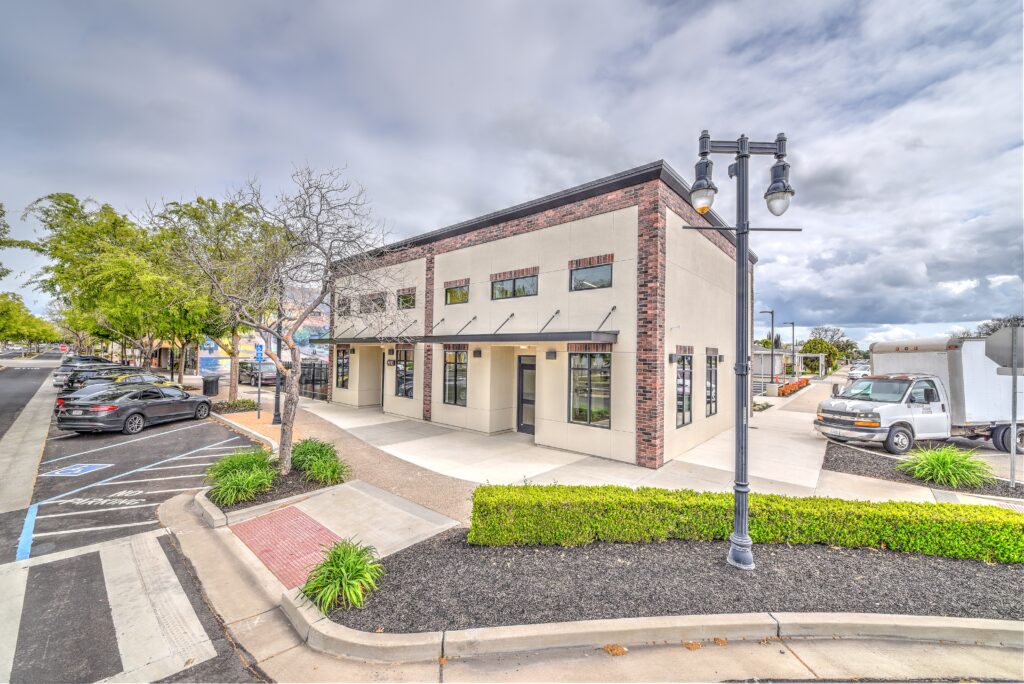
There is a reason we are seeing more of this work.
Reusing structure avoids demolition costs, reduces entitlement exposure, and often shortens timelines compared to ground-up development.
Projects can lease faster because they are improving an existing asset rather than waiting years for full delivery. And buildings with authentic architectural character frequently command stronger tenant interest than brand-new generic product.
That said, adaptive reuse is not automatic profit.
Structural upgrades, accessibility compliance, mechanical system replacements, and hazardous material abatement can erode margin quickly if not identified early. Not every building is a good candidate. Deep floor plates, inefficient layouts, or poor structural conditions can turn a promising concept into a budget problem.
The difference between a smart repositioning and a money pit is disciplined early evaluation.
Here is what we are seeing work in the field right now:
The projects that win are the ones that treat repositioning like a business decision, not just a construction project.
Tenant improvements and adaptive reuse are not a fallback strategy. In this environment, they are often the smarter play.
When capital is tighter and entitlement risk is higher, repositioning existing assets can deliver strong returns with less exposure. But only if the evaluation is honest, the budgeting is disciplined, and the team is aligned early.
We have built our reputation on helping owners across the Central Valley and Northern California think through these moves strategically, not just structurally.
If you are evaluating a tenant improvement, repositioning, or adaptive reuse opportunity, let’s talk it through. I am happy to walk you through what is working, what is not, and where we are seeing real traction in the field.
Email me at: j.simile@similebuilt.com.
Joseph J. Simile
President, Simile Construction
209.545.6111
